Sworn to Secrecy: The Inner Circle of Celebrity Staff Who See Everything and Say Nothing
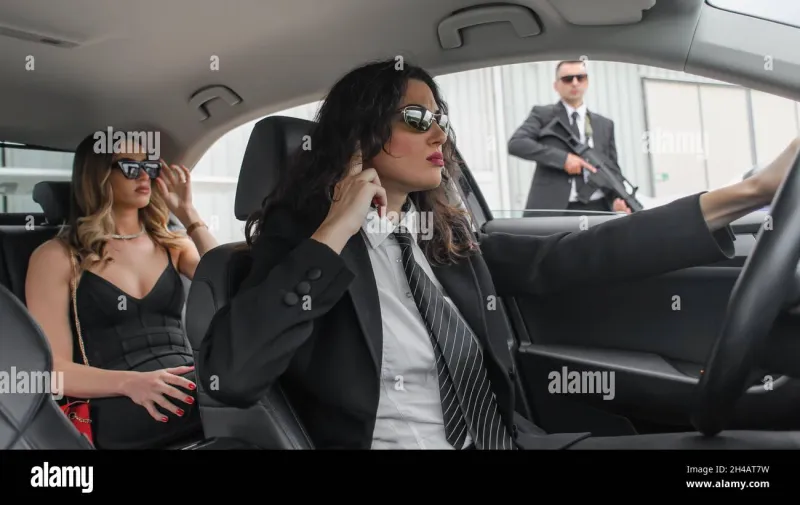
Photo: celebrity bodyguard personal assistant confidential professional discretion Hollywood staff, via c8.alamy.com
Every major celebrity has a public face — the one that shows up on the red carpet, in the carefully worded Instagram caption, in the sit-down interview where nothing truly surprising is ever said. And then there's everything else. The version of a famous person that exists at 3am in their own kitchen, in the middle of a screaming argument, or in the back of an SUV after something has gone very wrong.
The people who witness that version of celebrity life don't talk about it. They're legally bound not to. But the architecture of their silence — the NDAs, the confidentiality clauses, the careful way former staff members choose their words in the rare moments they speak at all — reveals more about celebrity culture than most interviews ever do.
The NDA as an Industry Standard
Non-disclosure agreements in Hollywood are so normalized that most people entering celebrity employment sign them without much thought. Entertainment attorneys who work in this space describe them as essentially universal for anyone with close personal access to a high-profile client — personal assistants, household managers, private chefs, nannies, security staff, drivers, stylists, and beyond.
"The scope of these agreements has expanded significantly over the past decade," one Los Angeles-based entertainment attorney explained, speaking in general terms. "It used to be fairly standard language around professional information. Now you're seeing clauses that cover personal observations, social media activity, even casual conversations with third parties. The goal is total information control."
The financial stakes attached to these agreements are serious. Violating an NDA with a high-profile celebrity can mean six- or seven-figure penalties, immediate legal action, and effective blacklisting from the industry. For someone whose entire career is built on working within celebrity households, the risk of speaking out is existential.
What the Role Actually Requires
To understand what these employees witness, you first have to understand the scope of what their jobs actually involve — which is almost always far beyond the job title suggests.
A personal assistant to a major celebrity isn't just managing a calendar. They're the person who gets called at midnight when something needs to be handled quietly. They know which relationships are real and which ones are for public consumption. They're aware of the health issues that haven't been disclosed, the family conflicts that never made Page Six, the financial decisions that would change how fans see their favorite star. They book the appointments, arrange the travel, manage the communications — and in doing all of that, they accumulate an extraordinary amount of sensitive information.
One former assistant, who agreed to speak with All Access Today on the condition of strict anonymity, described the role with a certain weary clarity: "You're essentially a human vault. You know things you never asked to know. Things that would be genuinely shocking to people on the outside. And you just... carry that. Because that's the job."
Bodyguards occupy a slightly different but equally intimate position. Where an assistant manages logistics, a bodyguard manages physical presence — which means they're there for the moments that happen in real time, without the buffer of planning. Arguments that escalate. Encounters with people from the celebrity's past. Situations that require fast decisions and even faster forgetting.
"The good ones develop almost a professional amnesia," says a security industry consultant who has placed staff with entertainment clients. "They see something, they handle it, and they file it away somewhere they never revisit. It's a psychological discipline as much as a professional one."
The Personality Gap
Perhaps the most consistent theme that emerges from conversations with former celebrity staff — even in the careful, hedged way those conversations tend to go — is the idea of a gap between public persona and private reality. Not necessarily a scandalous gap, though sometimes that too. More often, just a fundamental difference between who someone is when the camera is on and who they are when it isn't.
Some of those differences are humanizing. Stars who are warm and funny and surprisingly low-key behind closed doors, whose carefully managed public image is actually more guarded than the real person underneath. Others are less flattering — the performer whose public accessibility is entirely constructed, who treats the people around them with a coldness their fans would find genuinely jarring.
"I think people assume that celebrity staff are just protecting scandals," says one former household manager who worked for multiple high-profile clients over a fifteen-year career. "Sometimes it's that. But a lot of the time, what's being protected is just the gap between the brand and the human being. Which, honestly, can be even more interesting."
The Secrets That Never Surface
Speculation about what's actually contained in the vaults of celebrity NDAs has become its own cultural genre — the Reddit threads, the blind items, the former-staffer memoirs that come out decades after the fact when legal agreements have finally expired.
The categories that entertainment insiders most commonly allude to, without specifics, tend to cluster around a few themes: undisclosed relationships (both romantic and familial), health information that would affect public perception of a star's image or career, financial situations that contradict a carefully maintained public narrative, and behavioral patterns — toward staff, toward partners, toward strangers — that don't match the brand.
Occasionally, details do surface. A nanny who eventually wrote a book. A driver who gave an interview years after leaving the job. A housekeeper whose account emerged during a legal proceeding. These moments offer a small window into a world that is otherwise almost completely sealed, and the public appetite for them is enormous — which probably tells us something about how much we sense we're not getting the full picture.
The Cost of Knowing
What gets less attention is what it actually costs the people in these roles to carry this kind of professional burden over time. The isolation that comes from not being able to talk about your work with friends or family. The psychological weight of witnessing someone else's worst moments and being required to absorb them without outlet. The strange intimacy of knowing someone deeply while being essentially invisible to them in a social sense.
Turnover in celebrity personal staff is high, and it's not only about the demanding hours or the unpredictable schedules. It's also about the particular kind of emotional labor involved in being a professional keeper of secrets — and the way that labor tends to accumulate without acknowledgment.
"You're trusted completely, and that trust is real," the former assistant told us. "But it's a trust that only flows one direction. They trust you with everything. You trust them with nothing. That's the deal."
The velvet rope, it turns out, runs right through the middle of the celebrity household — and the people who live on the inside of it are bound by far more than just a paycheck.