Perfectly Imperfect: The Hidden Strategy Behind Every Celebrity 'Real Moment'
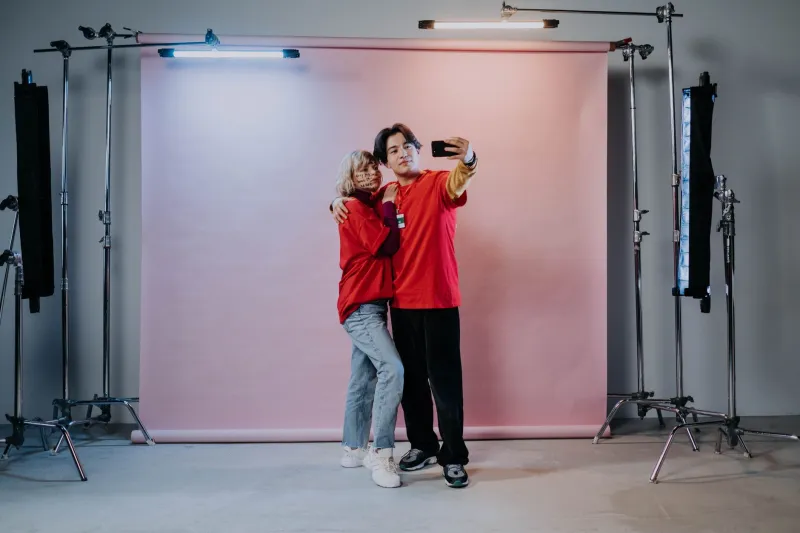
Scroll through your feed on any given Tuesday and you'll probably land on at least one celebrity having what looks like a genuine human moment. Maybe it's a teary-eyed caption about burnout. Maybe it's a grainy bathroom selfie posted at 11 p.m. with zero filter and a lot of feelings. Maybe it's a candid shot of a famous couple looking disheveled and totally, beautifully normal at a farmers market in Silver Lake.
It feels real. It feels like access. And that, right there, is the entire point.
Welcome to the most sophisticated illusion in modern celebrity culture: the carefully engineered authentic moment.
The Relatability Industrial Complex
Here's the thing nobody in the industry wants said out loud — vulnerability has become a deliverable. Publicists, brand strategists, and social media managers now spend significant chunks of their time crafting content that looks like it bypassed all of them entirely. There's even a term floating around certain PR circles: "curated candor." It's the art of making a managed message feel like a midnight confession.
And it works. Spectacularly.
When a pop star posts a shaky-cam video crying about how hard the last year has been, engagement spikes. When an actor shares a photo of themselves looking tired and unglamorous on a random Wednesday, the comments fill up with "I love that she's so REAL." The audience rewards the performance of realness more reliably than it rewards actual polish — and the people managing these careers have absolutely done the math on that.
"Authenticity is the new aspirational," one veteran entertainment publicist — who, naturally, requested anonymity — told us. "In the '90s, you wanted your client to look untouchable. Now you want them to look like they just texted you from their couch. The goal is the same. Only the aesthetic changed."
Media Training for Messy Moments
This might surprise you: celebrities get coached on how to be candid. Actual, professional coaching. Media training has evolved well beyond prepping someone for a Barbara Walters sit-down. Today's sessions include exercises specifically designed to help clients appear unguarded — how to pause with emotion without losing the message, how to let a tear fall without looking like you're performing a tear, how to answer a personal question in a way that feels confessional while never actually giving anything sensitive away.
One former media trainer who worked extensively in Los Angeles described it this way: "We'd literally practice the 'I wasn't going to talk about this, but...' moment. That hesitation before the big reveal? That's rehearsed. The voice crack? Sometimes rehearsed. The point is to make the audience feel like they're witnessing something they weren't supposed to see."
The irony is almost poetic. The moments that feel most unscripted are often the ones with the most script behind them.
Timing Is Everything — and It's Never an Accident
Pay attention to when these moments drop. A celebrity opens up about a personal struggle the same week their new project releases. A messy, relatable story about family conflict surfaces right as a reputation needs softening after bad press. A no-makeup selfie lands 48 hours before a beauty brand partnership gets announced.
Coincidence? Rarely.
The timing of an "unfiltered" post is often more strategically mapped than a Super Bowl ad buy. Teams track news cycles, monitor competitor releases, and identify cultural moments where a personal story will land with maximum emotional resonance. Some celebrities have entire content calendars built around strategic vulnerability windows — pre-planned openings where a real-seeming moment will do the most brand-building work.
This doesn't mean every emotion is fake. It means the deployment of that emotion is managed. A celebrity might genuinely be going through something difficult. The question is whether the decision to share it at 9:47 on a Thursday morning was spontaneous or scheduled.
The Paradox at the Center of It All
Here's where it gets philosophically messy: does the calculation behind these moments make them less real?
Not necessarily. Plenty of celebrities share genuine feelings through a strategic filter. The emotion can be authentic even when the platform, timing, and framing are not. What gets complicated is the implied contract with the audience — the suggestion that what you're seeing is unmediated truth, when it's actually a very specific version of truth that someone decided you should have access to right now.
Audiences are getting savvier about this, too. There's a growing contingent of fans who openly clock the patterns — the well-lit "candid," the perfectly imperfect caption with exactly the right typo, the "I almost didn't post this" post that clearly went through three rounds of edits. Some fans play along anyway, appreciating the craft of it. Others feel burned when the curtain slips.
The celebrities who navigate this best are the ones who've found a middle ground — sharing enough actual mess that the managed version has real texture to it. The ones who struggle are those whose "authenticity" feels so polished it circles back around to feeling like a press release.
What It Actually Costs
There's a human toll to this strategy that doesn't get discussed enough. When you train yourself to perform vulnerability, you start to lose track of where the performance ends. Several celebrities who've spoken publicly about mental health struggles — including a few who've been very candid about therapy and burnout — have also quietly admitted in interviews that the pressure to be publicly authentic added its own layer of anxiety.
You're not just managing your image anymore. You're managing the image of someone who doesn't manage their image. That's a 24/7 job with no clear off switch.
And the audience expectations that come with building a "real" persona are brutal. One misstep — one moment that reads as too polished, too PR, too managed — can unravel years of carefully constructed relatability. The more authentic your brand, the higher the stakes when the mask slips in the wrong direction.
So What Does Genuine Actually Look Like?
Honestly? It's harder to spot than you'd think. Some of the most managed celebrities in the game occasionally have genuinely unplanned moments — an off-script interview answer, a real reaction caught on a live stream, a post that clearly didn't go through the usual approval chain. And some of the celebrities with reputations for raw honesty are running some of the tightest image operations in the business.
The tell, if there is one, is usually in the follow-through. Real moments tend to be inconsistent. They don't always serve the narrative. They sometimes contradict the brand. Calculated authenticity, by contrast, has a suspiciously clean through-line — every vulnerable moment somehow reinforces exactly the story the celebrity wants you to believe about them.
Next time a celebrity post stops your scroll because it feels so real, it's worth sitting with that feeling for a second. Not to become cynical about it — but to appreciate just how much work went into making you feel exactly that way.
That's not nothing. In its own strange way, it's actually impressive.